Diagnosis and management of Duchenne Muscular Dystrophy
Diagnosis (infancy/childhood)
Today, most children with Duchenne go undiagnosed during the presymptomatic stage (when children show few symptoms, if any), unless there is a family history of the condition or blood tests are done for other reasons. Symptoms such as late walking, crawling or talking are present, but they are usually subtle and often go unrecognized at this stage.
Parents are often the first to notice differences in their child's development, the first to ask questions and the ones who request further testing to explain the delays they see.
Early ambulatory stage (childhood)
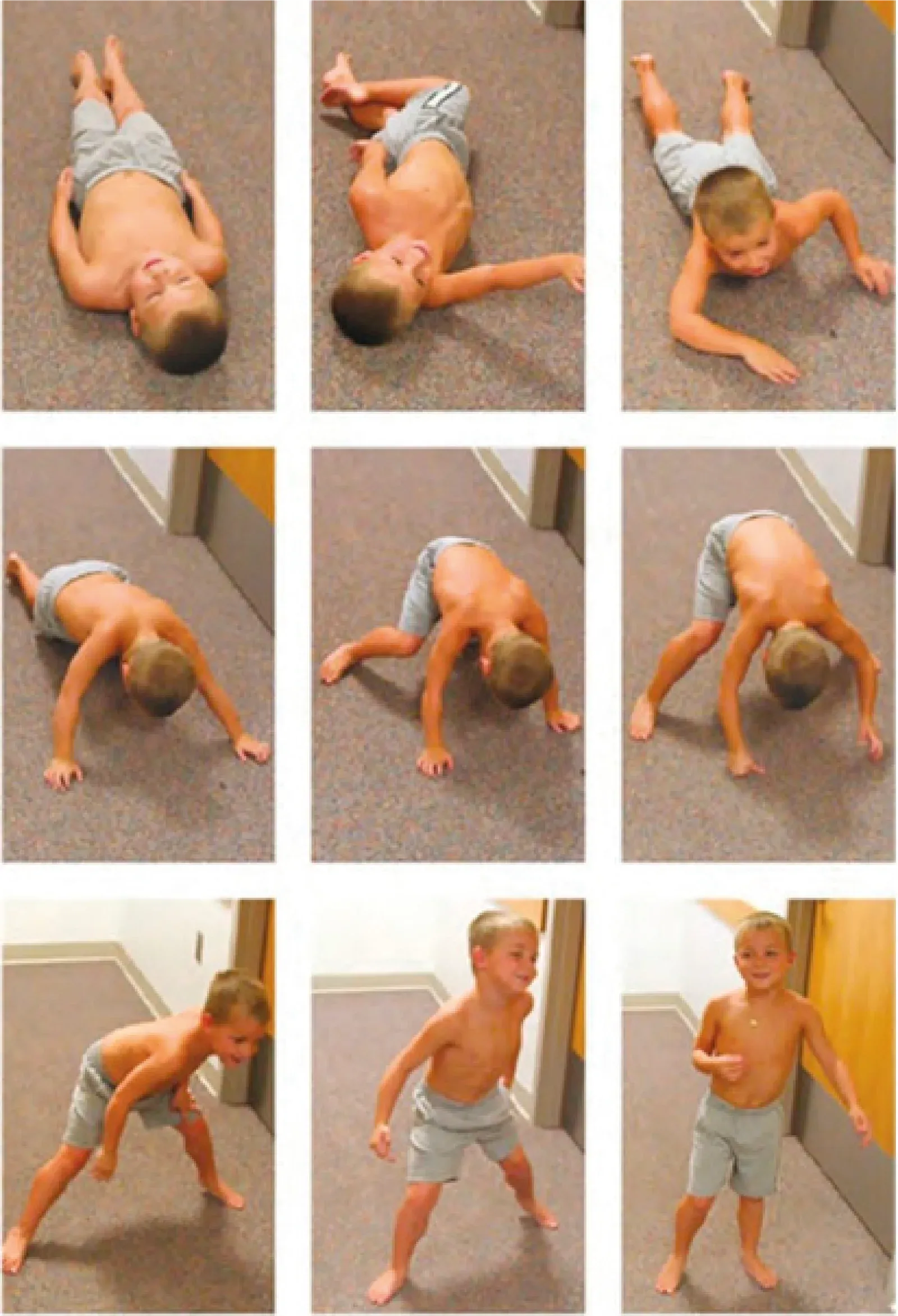
In the early ambulatory (walking) stage, children may show classic signs of Duchenne. These signs are often subtle at first and may include:
- Difficulty lifting the head or neck.
- Not walking by 15 months.
- Difficulty walking, running or climbing stairs.
- Frequent tripping and falling.
- A preference for hopping and jumping.
- Speech delay compared to other children the same age.
- Gowers' maneuver (using the hands on the legs to stand up).
- Toe walking.
- Slow growth or lower-than-expected weight.
- Enlarged calves.
- Stiffness or contractures; legs set wide apart when standing.
- Feet turned outward and a “waddling gait” (lordosis).
Psychosocial, learning and behavior
People living with Duchenne are more likely to face learning and behavioral challenges. Some challenges are due to the lack of dystrophin in the brain; others may come from adjusting to physical limitations.
Some medications, such as steroids, which are often started in the early or late ambulatory stage, may also play a role. Some children taking steroids may have difficulty with impulse control, anger, mood changes, attention and memory, while others do not.
If developmental and/or learning delays are found, an evaluation by a psychologist or neuropsychologist can help identify specific issues and provide recommendations to support the student and help them reach their full potential. These issues can improve over time with intervention and are best managed when detected early.
Physical therapy
Getting to know the physical therapy team at this early stage allows exercise and stretching routines to be introduced gradually to keep muscles flexible and prevent or minimize tightness in the joints.
The rehabilitation team can also advise on appropriate exercise during playtime and recess, as well as adaptive physical education, to keep your child safe while supporting their participation at school.
Akari Families: care and diagnosis
The specific cause of a medical condition is called a “diagnosis.” Establishing an accurate diagnosis is very important when Duchenne is suspected. Depending on the health system, a primary care provider may be the first professional to hear concerns and refer the family to the neuromuscular team. The goal at this stage is to guide the patient and family, explain the tests that are needed and provide a “medical home.”
The medical history is reviewed, tests are ordered (for example CK, genetic and laboratory tests) and, when needed, care is coordinated with specialists to confirm the diagnosis and plan follow-up.
Managing Duchenne
Neuromuscular management
In Duchenne, skeletal muscles gradually weaken because they lack dystrophin. Follow-up with a neuromuscular specialist (NMS) who is familiar with Duchenne is needed to understand how the condition progresses and to start the right therapies as early as possible.
Steroid management
Corticosteroids can benefit many people with Duchenne, but their use requires balancing proactive management of side effects. It is an important topic to discuss with the NMS.
Endocrine management
Some treatments (such as steroids) can affect growth and hormones. The NMS may recommend an evaluation by pediatric endocrinology to monitor growth, puberty and bone density.
Bone health (osteoporosis)
Bone health is key in both the ambulatory and non-ambulatory stages. Steroids and reduced activity can lower bone mineral density and increase the risk of fractures; preventive strategies and tests are recommended as advised by the care team.
Orthopedic management
The main goals are to maintain walking and/or motor function for as long as possible and to minimize joint contractures. Walking supports bone health and posture.
Rehabilitation management
Access to different types of rehabilitation is needed throughout life (PT, OT, SLP, mobility equipment and adaptations). The team should know the person's goals and daily routine to reduce the impact of Duchenne and improve quality of life.
Pulmonary management
In the early stages there are few respiratory symptoms; later on, weakness of the breathing muscles and sleep-related problems may appear. The care team may recommend monitoring and respiratory support when needed.
Cardiac management
The heart is also affected in Duchenne. Regular follow-up with cardiology (imaging, medication and routine visits) is key to detecting and treating cardiomyopathy early.
Gastrointestinal management
Nutrition, swallowing and other gastrointestinal issues.
At different ages you may need to see the following specialists: a registered dietitian nutritionist (RDN), a physical therapist (PT), a speech-language pathologist (SLP) and a gastroenterologist. Gastrointestinal concerns for people living with Duchenne include being overweight or underweight, chronic constipation and difficulty swallowing (dysphagia).
Psychosocial management
Navigating life with Duchenne can be complex, and psychosocial and emotional support is critical for both the person living with Duchenne and their family. Psychosocial issues can come up at any time. It is important to tell your neuromuscular team if you are having trouble with any of the points listed below.
- Difficulty with social interactions and/or making friends (e.g., social immaturity, weaker social skills, withdrawal or isolation from peers).
- Learning problems.
- Excessive or constant anxiety/worry.
- Frequent arguments and behavioral outbursts; difficulty controlling anger or sadness.
- Higher risk of neurobehavioral and neurodevelopmental disorders, including autism spectrum disorder, attention-deficit/hyperactivity disorder (ADHD) and obsessive-compulsive disorder (OCD).
- Emotional adjustment problems, and anxiety and/or depression.